
Data lifecycle

Open science

Figure from Pontika et al., 2015
Open Science in the world
The Open Science by UNESCO
Open science aims at making scientific knowledge openly available, accessible and reusable. The key elements of open science include: open access to scientific knowledge (including open access to scientific publications, data, educational resources, software and hardware); open infrastructures; open engagement with society and dialogue with indigenous and traditional knowledge systems, among others1.
UNESCO asks member States to :
1. Promote a shared understanding of open science and set out diverse paths to achieving it
2. Develop an enabling policy environment for open science
3. Invest in infrastructure and activities that contribute to open science
4. Invest in training, education, digital literacy and capacity-building to support open science
5. Foster a culture of open science and align incentives to support it
6. Promote innovative approaches for open science at all stages of the scientific process
7. Encourage international and multi-stakeholder cooperation in the context of open science to reduce gaps in technology and knowledge
Open Science in Europe
Open Science represents a new approach to the scientific process based on cooperative work and new ways of diffusing knowledge by using digital technologies and new collaborative tools.

Open Science in Europe
The ambition of the European Open Science Cloud, known as EOSC, is to develop a Web of FAIR Data and Services for science in Europe. The implementation of EOSC is based on a long-term process of alignment and coordination pursued by the Commission since 2015.1.
EOSC will also improve the situation for researchers in many ways, namely by :
1. Enhancing scientific research by providing access to a weath of data and research outputs from various fields and institutions.
2. Fostering innovation by making it easier for researchers to share, collaborate and build on each others’ work.
3. Improving transparency and reproducibility of research by making data and methods more open and accessible
4. Reducing data silos and duplication of efforts by promoting data sharing and reuse
5. Facilitating interdisciplinarity research and cross-sectoral collaboration by making data and resources from different domains more easily available
Open science in Europe

Open Science in France
Missions
- To ensure the coordinated implementation, with higher education and research institutions, of the national open science strategy
- To enable the development of open science skills within the scientific community
- To coordinate France’s actions in the field of open science at the European and international level
- Define the principles and guidelines for the use of funds from the National Open Science Fund
- Define the principles and guidelines for negotiations with the main publishers of scientific publications
- To propose to the ministers responsible for research and higher education and to public authorities all actions likely to strengthen or promote access to knowledge, data, software and source code for research


Open Science in France
Second French Plan for Open Science
France is committed to ensuring that the results of scientific research are open to all, researchers, companies and citizens, without hindrance, without delay, without payment.1
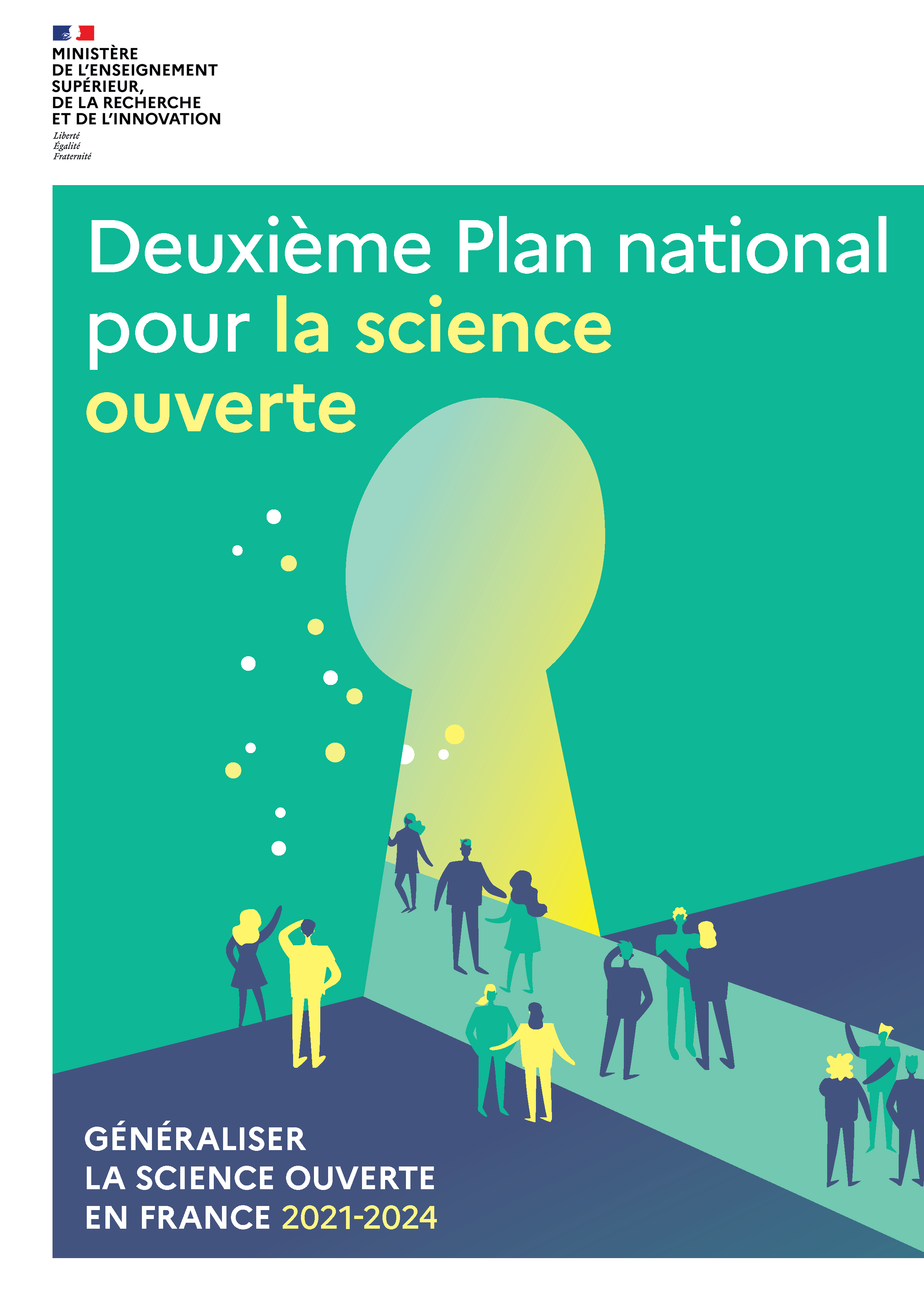
1. Generalize open access to publications
2. Structure, share and open research data
3. Open and promote source codes produced by research
4. Transforming practices to make open science the default principle
Open Science in France
The French Open Science Strategy (OSS) 2026–2033
The French Open Science Strategy (OSS) 2026–2033, aims to strengthen the transformations initiated with the two previous national plans. Covering eight years, it is structured around ambitions, challenges, strategic objectives, and four-year action plans. The 2026–2029 action plan breaks down 8 strategic objectives into 30 actions and 75 measures.1
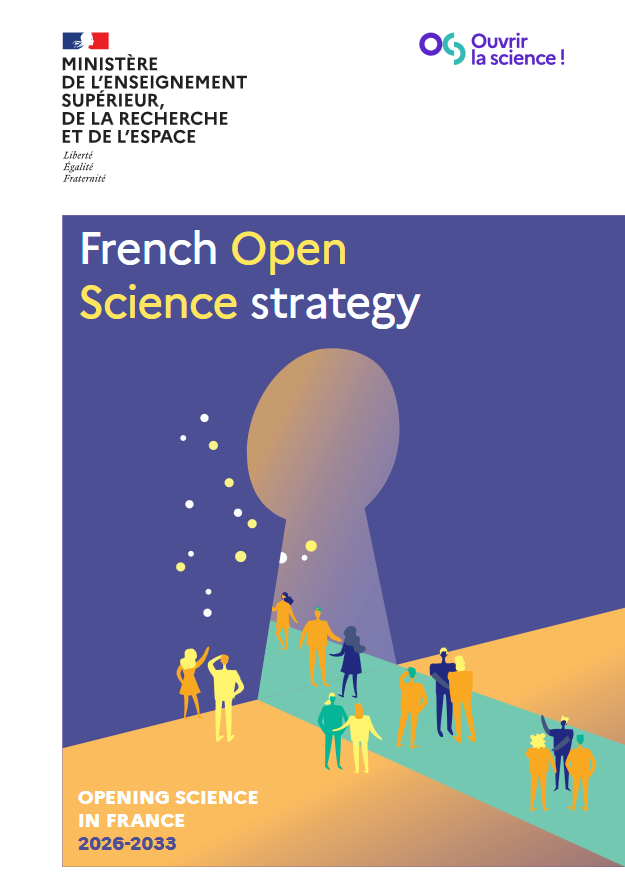
OSS Strategic objectives :
1. Encourage a shift in practices to make open science the default approach
2. Consolidate the governance and instruments of open science policy
3. Reinforce the ecosystem of open science services and infrastructures, pillars of academic sovereignty
4. Consolidate france’s position within the european and international open science landscape
5. Structure and support open, reliable and high-quality academic publishing
6. Consolidate the structuring of open and shared research data in accordance with the FAIR principles
7. Increase the openness and valorisation of source code and software from research projects
8. Ensure the transparency of clinical trials
Legal concerns
The Law for a Digital Republic (LOI n° 2016-1321 pour une République Numérique (1)) is a French law promulgated on October 7, 2016.

Article 30
This article grants authors the right to disseminate their research in open access.
Article 533-4
- I. Lorsqu’un écrit scientifique issu d’une activité de recherche financée au moins pour moitié par des dotations de l’État, des collectivités territoriales ou des établissements publics, par des subventions d’agences de financement nationales ou par des fonds de l’Union européenne est publié dans un périodique paraissant au moins une fois par an, SON AUTEUR DISPOSE, MÊME APRÈS AVOIR ACCORDÉ DES DROITS EXCLUSIFS À UN ÉDITEUR, DU DROIT DE METTRE À DISPOSITION GRATUITEMENT DANS UN FORMAT OUVERT, par voie numérique, sous réserve de l’accord des éventuels coauteurs, la VERSION FINALE DE SON MANUSCRIT ACCEPTÉE POUR PUBLICATION, dès lors que l’éditeur met lui-même celle ci gratuitement à disposition par voie numérique ou, à défaut, à l’expiration d’un délai courant à compter de la date de la première publication. Ce délai est au MAXIMUM DE SIX MOIS pour une publication dans le domaine des sciences, de la technique et de la médecine et de douze mois dans celui des sciences humaines et sociales.
- La version mise à disposition en application du premier alinéa ne peut faire l’objet d’une exploitation dans le cadre d’une activité d’édition à caractère commercial.
- II. Dès lors que les DONNÉES ISSUES D’UNE ACTIVITÉ DE RECHERCHE FINANCÉE AU MOINS POUR MOITIÉ PAR DES DOTATIONS DE L’ÉTAT, des collectivités territoriales, des établissements publics, des subventions d’agences de financement nationales ou par des fonds de l’Union européenne ne sont pas protégées par un droit spécifique ou une réglementation particulière et qu’elles ont été rendues publiques par le chercheur, l’établissement ou l’organisme de recherche, leur RÉUTILISATION EST LIBRE.
- III. L’éditeur d’un écrit scientifique mentionné au I ne peut limiter la réutilisation des données de la recherche rendues publiques dans le cadre de sa publication.
- IV. Les dispositions du présent article sont d’ordre public et toute clause contraire à celles-ci est réputée non écrite.
Legal concerns
The Law for a Digital Republic (LOI n° 2016-1321 pour une République Numérique (1)) is a French law promulgated on October 7, 2016.

This Law addresses the following elements:
- Accessibility
- Open Data and Data Portability
- Free software and Open formats
- Copyright issues
- Digital access for all
- Sovereign operating system (OS)
- Privacy
- etc.
Legal concerns
“LOI n° 2016-1087 du 8 août 2016 pour la reconquête de la biodiversité, de la nature et des paysages”
Data in this legal framework1
- Leveraging knowledge: data from impact studies will be incorporated into the natural heritage inventory.
- contributing to open data for impact assessment data
Legal concerns
Licenses


CC-BY 4.0: This license enables reusers to distribute, remix, adapt, and build upon the material in any medium or format, so long as attribution is given to the creator. The license allows for commercial use. CC BY includes the following elements: BY: credit must be given to the creator.
Etalab 2.01: A license that fits within an international context by being compatible with the standards of Open Data licenses developed abroad and in particular those of the British government (Open Government Licence) as well as other international standards (ODC-BY, CC-BY 4.0).
Ethics : the FAIR & CARE principles
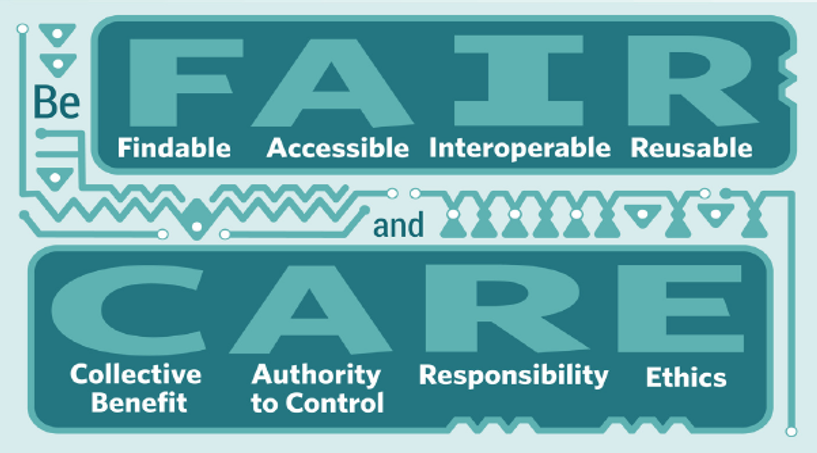
Ethics : the CARE principles
Definition
Indigenous data are data, information, and knowledge, in any format, that impact Indigenous Peoples, nations, and communities at the collective and individual levels; data about their resources and environments, data about them as Individuals, and data about them as collectives1,2.
to go further
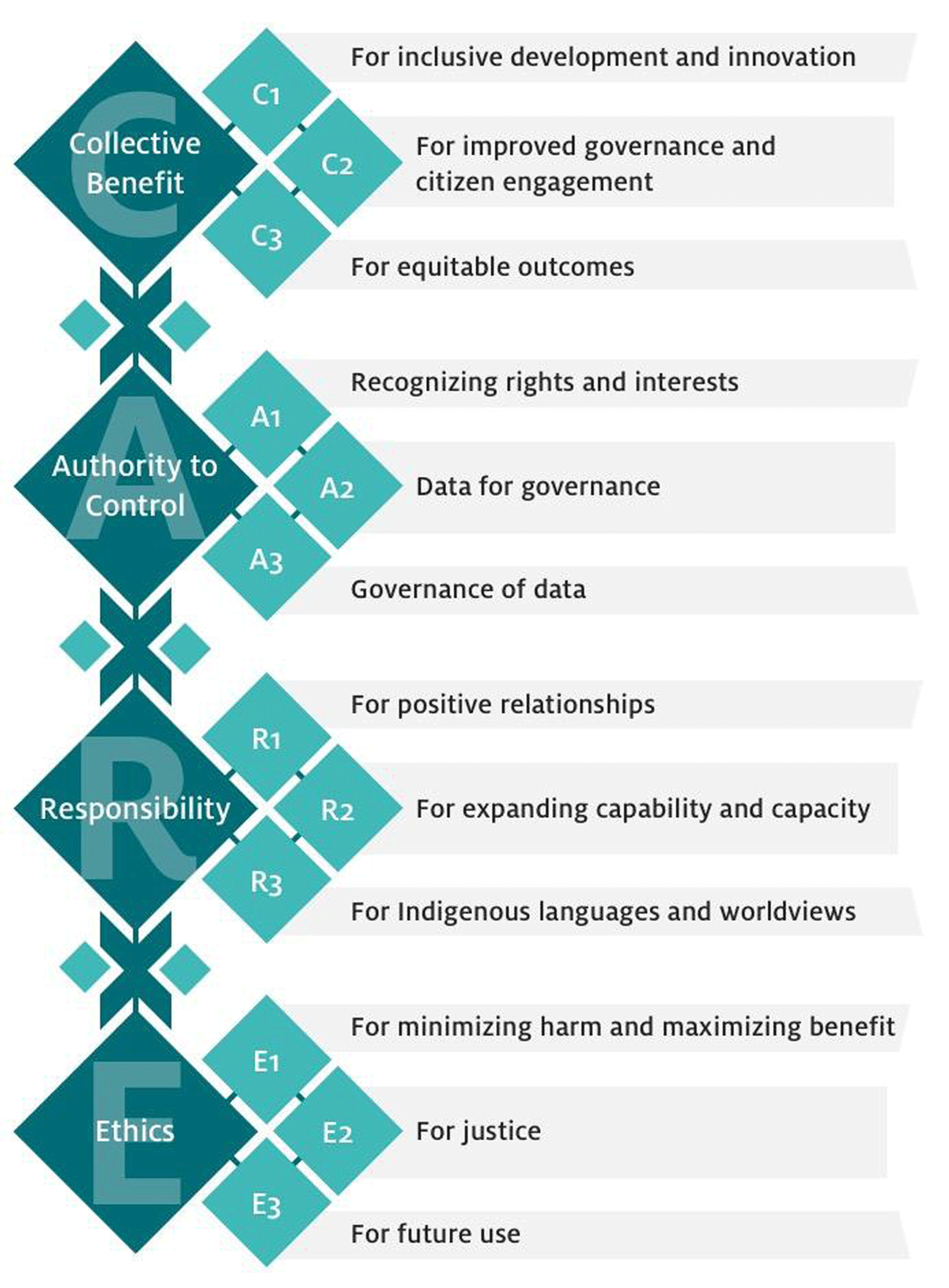 Source: Carroll et al. (2020)
Ethics : the CARE principles
The Kunming-Montreal Global Biodiversity Framework
The Kunming-Montreal Global Biodiversity Framework (KMGBF) was adopted during the fifteenth meeting of the Conference of the Parties (COP 15) […] Among the Framework’s key elements are 4 goals for 2050 and 23 targets for 2030.
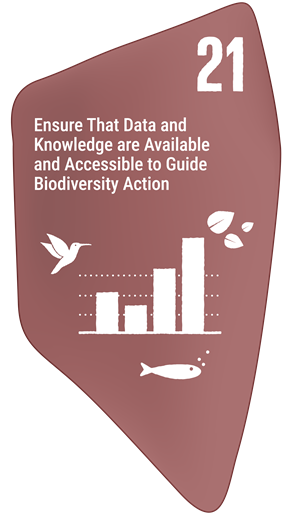
Target 21 :Ensure That Knowledge Is Available and Accessible To Guide Biodiversity Action
Ensure that the best available data, information and knowledge, are accessible to decision makers, practitioners and the public to guide effective and equitable governance, integrated and participatory management of biodiversity, and to strengthen communication, awareness-raising, education, monitoring, research and knowledge management and, also in this context, traditional knowledge, innovations, practices and technologies of indigenous peoples and local communities should only be accessed with their free, prior and informed consent[1], in accordance with national legislation1.
Ethics : The FAIR & CARE principles
Differences and complementarities
Operationalizing the FAIR Principles for scientific data with the CARE Principles for Indigenous Data Governance enhances machine actionability and brings people and purpose to the fore to resolve Indigenous Peoples’ rights to and interests in their data across the data lifecycle1.
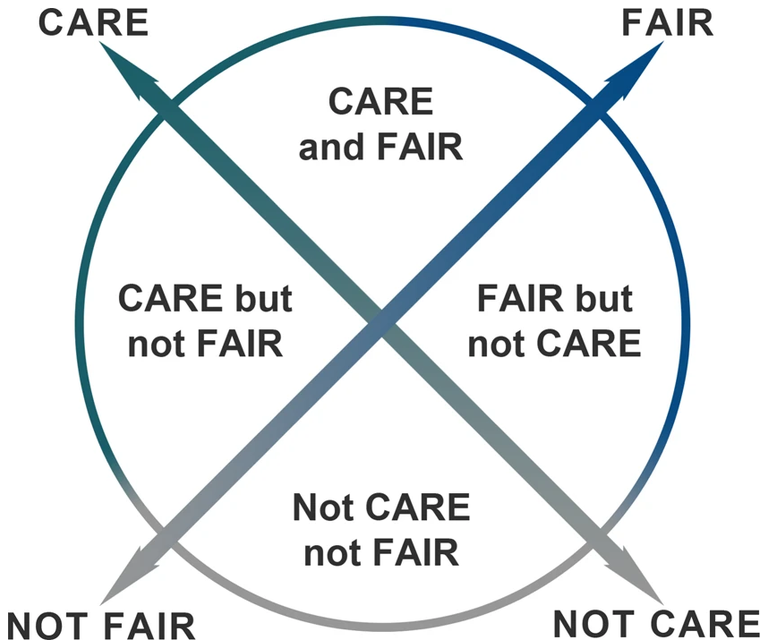
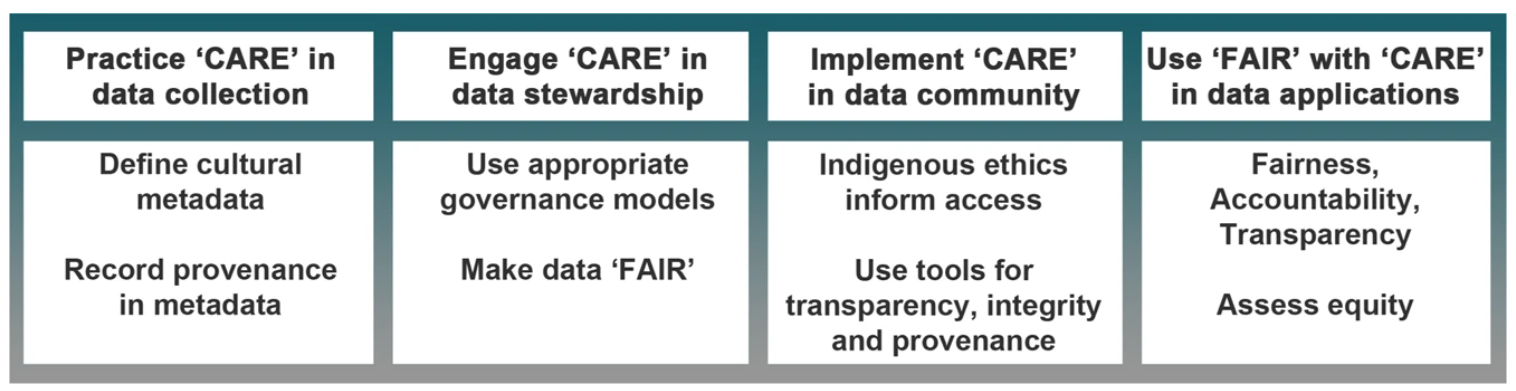
Toward an implementation of the FAIR & CARE Principles across the data lifecycle.
Focus on the Nagoya protocol
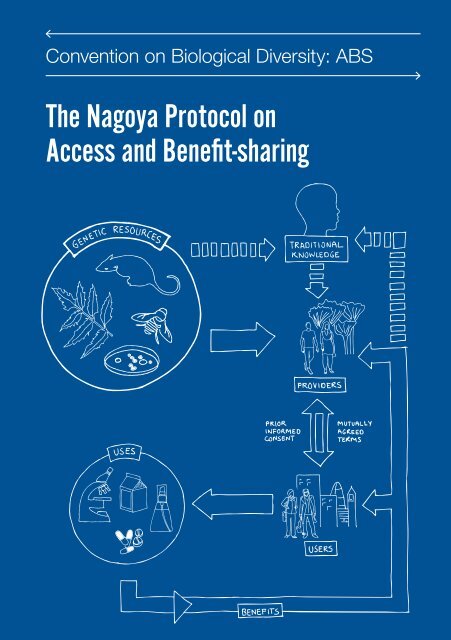
The Nagoya Protocol on Access to Genetic Resources and the Fair and Equitable Sharing of Benefits Arising from their Utilization (ABS) to the Convention on Biological Diversity is a supplementary agreement to the Convention on Biological Diversity.
It provides a transparent legal framework for the effective implementation of one of the three objectives of the CBD: the fair and equitable sharing of benefits arising out of the utilization of genetic resources1.
The Nagoya Protocol on ABS was adopted on 29 October 2010 in Nagoya, Japan and entered into force on 12 October 2014.
Focus on Rare and Threatened Species
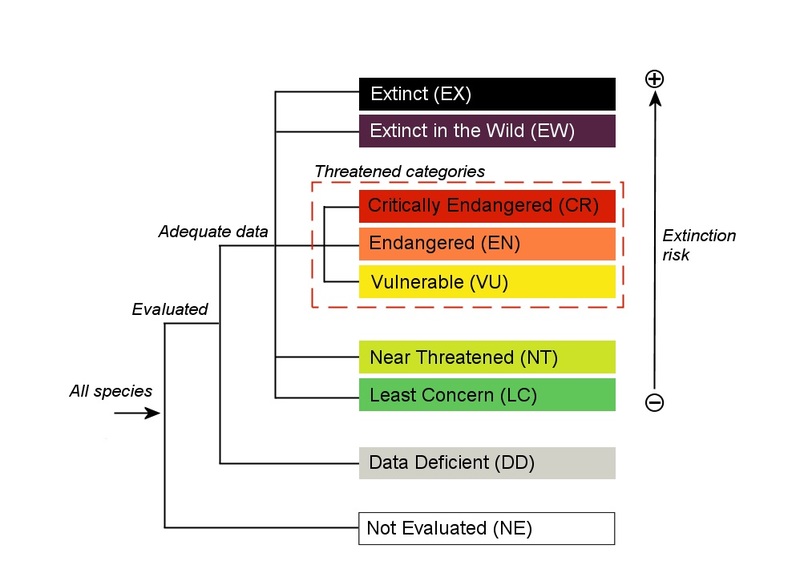
The geographic coordinates of species sightings, habitat data, and breeding sites are often vital to conservation efforts, but they can also be misused, especially in the context of poaching and illegal wildlife trade. Researchers and conservationists face a delicate balance between making data openly available for the advancement of science and protecting the species they aim to conserve1
Web-accessible biodiversity databases accept and openly share species observations from the public, benefitting research, conservation, and education. However, public data sharing can also bring harm, for example by facilitating poaching. Databases may mitigate harm by designating certain species as “sensitive” and restricting access to those species data2.
Focus on Rare and Threatened Species
In France
« En ce qui concerne les données de biodiversité, l’article L.411-1-A du Code de l’environnement prévoit que : « les données brutes contenues dans les inventaires mentionnés au présent article sont diffusées comme des données publiques gratuites et librement réutilisables, sauf si leur diffusion porte atteinte aux intérêts mentionnés aux 1° à 4° du I de l’article L. 124-4. Les conditions dans lesquelles la diffusion des données prévue au présent alinéa peut être restreinte pour des motifs de protection de l’environnement sont précisées par décret. »
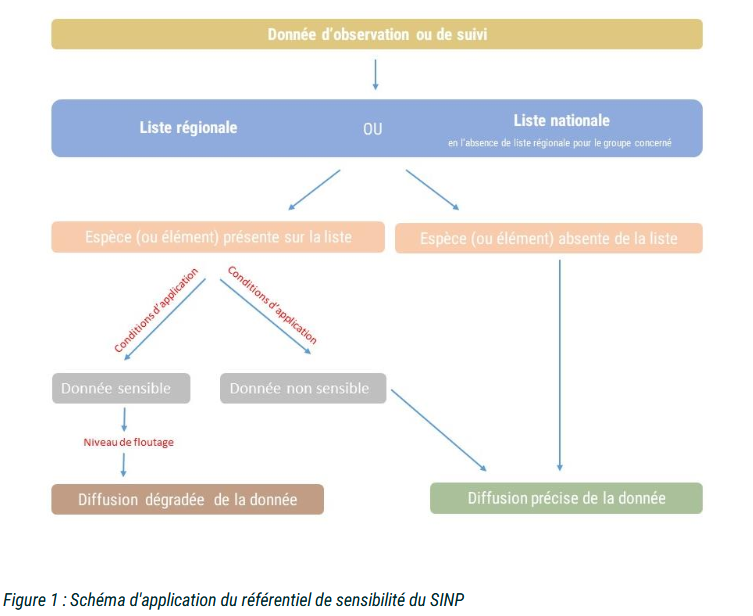
From Ichter et al. (2024)
Focus on General Data Protection Regulation - GDPR
Definition and perimeter
The acronym GDPR stands for “General Data Protection Regulation.” The GDPR governs the processing of personal data within the territory of the European Union.
‘personal data’ means any information relating to an identified or identifiable natural person (‘data subject’); an identifiable natural person is one who can be identified, directly or indirectly, in particular by reference to an identifier such as a name, an identification number, location data, an online identifier or to one or more factors specific to the physical, physiological, genetic, mental, economic, cultural or social identity of that natural person12.
It harmonizes rules across Europe by providing a single legal framework for businesses, enabling them to develop their digital activities within the EU by fostering user trust.
General Data Protection Regulation - GDPR
Principles
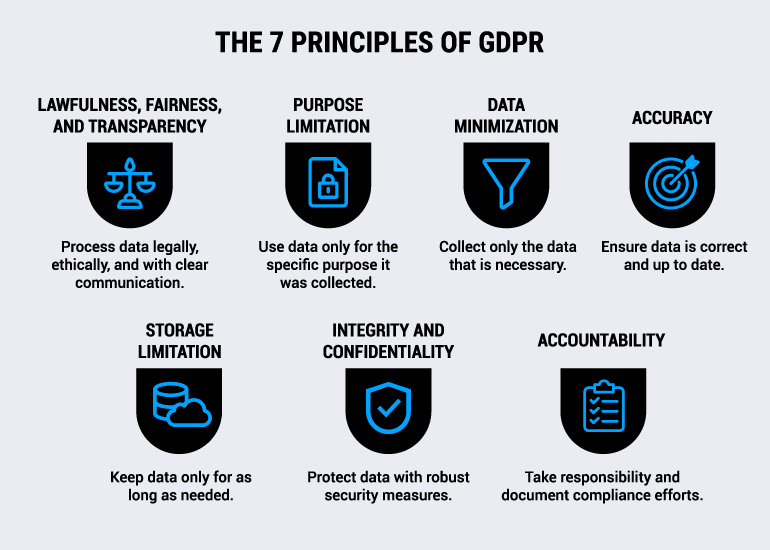
- Principles relating to processing of personal data
- Lawfulness of processing
- Conditions for consent
- Conditions applicable to child’s consent in relation to information society services
- Processing of special categories of personal data
- Processing of personal data relating to criminal convictions and offences
- Processing which does not require identification
And you? Are you FAIR, CARE and Open?

